

If you’re searching for a clear, up‑to‑date breakdown of artificial intelligence in video games, you’re likely trying to understand how AI is shaping gameplay, competition, and player experience right now—not years ago. This article is built to meet that need directly. We explore how AI drives smarter NPC behavior, adaptive difficulty systems, procedural world design, and competitive esports balancing, while cutting through hype to focus on practical impact.
From dynamic enemy tactics to machine‑learning powered matchmaking, we analyze how modern titles are using AI to create deeper immersion and fairer competition. We also examine how these systems influence game event metas and player strategy, so you can adapt faster and play smarter.
Our insights are grounded in ongoing analysis of live game environments, competitive tournament data, and evolving development trends. By the end, you’ll have a clear understanding of where AI stands today in gaming—and what it means for your next match.
The New Architects of Play: How AI is Redefining Game Design
Move beyond scripted villains and recycled quests. Today’s breakthroughs in artificial intelligence in video games are quietly rewriting the rules. Developers once believed bigger teams meant better worlds. I disagree. Scale alone breeds bloat, not immersion.
Instead, AI-driven procedural generation—systems that create content dynamically rather than manually—builds environments that shift with player behavior. Think enemies that adapt like a rival in Elden Ring, not mannequins on patrol. Critics argue AI dilutes artistic control. Yet, when guided well, it amplifies creativity, automating repetition so designers focus on meaning. Ultimately.
Beyond Basic Scripts: The Evolution of Intelligent Characters
From Predictable to Dynamic
Early enemies in games ran on Finite State Machines (FSMs)—a system where characters switch between a small set of predefined behaviors like patrol, chase, or attack. Once you spotted the pattern, the illusion cracked (and so did the challenge). Modern systems such as Behavior Trees—hierarchical decision models—and Goal-Oriented Action Planning (GOAP)—where characters select actions based on desired outcomes—have changed that completely.
For players, this means less predictability and more strategic depth. Instead of memorizing patterns, you’re reacting to evolving situations. The benefit? Every encounter feels fresh, forcing sharper thinking and rewarding adaptability.
Adaptive Opponents
Today’s NPCs can analyze player tactics, share information, and adjust in real time. In Metal Gear Solid V, for example, if you rely on nighttime stealth, enemies start wearing night-vision goggles. Favor headshots? They deploy helmets. This is artificial intelligence in video games working behind the scenes to counter your habits.
The upside is clear: your victories feel earned. You’re not beating a script—you’re outsmarting a system designed to push back. That tension creates deeper satisfaction and longer-lasting engagement.
Creating Emergent Gameplay
Because these systems interact dynamically, unscripted moments emerge. A guard fleeing to call reinforcements, only to trigger an alarm you forgot to disable, becomes your story—not a developer’s cutscene. (Yes, sometimes chaos is the best designer.)
Impact on Immersion
When characters react believably, worlds feel alive. Coordinated squads, adaptive patrols, evolving defenses—these details boost immersion and replay value. For players, the benefit is simple: smarter systems create richer, more personal experiences every time you press start.
Building Infinite Worlds with Procedural Content Generation (PCG)
Let’s clear something up first. AI-driven Procedural Content Generation (PCG) isn’t just about shuffling dungeon rooms like a deck of cards. True PCG uses rule-based systems powered by machine learning to create interconnected elements—ecosystems, questlines, architectural styles—that actually make sense together. In other words, it’s less “random chaos” and more “organized creativity.” (Think jazz, not a toddler banging on a piano.)
Back in the day, early roguelikes gave us endlessly looping dungeons that felt… familiar. Suspiciously familiar. Today, however, artificial intelligence in video games enables sprawling planets with unique biomes, weather systems, and terrain formations. Modern exploration titles generate landscapes so distinct you half expect to find your name carved into a mountain. That’s the quality leap: from repetition to believable complexity.
Even more exciting, this tech democratizes development. Smaller studios can now build massive worlds without hiring a small army of level designers. Instead of handcrafting every rock and shrub, teams define systems and let AI expand them logically. (Pro tip: the magic isn’t less design—it’s smarter design.) This scalability directly impacts long-term player immersion, which ties closely to the science behind player engagement and retention.
Here’s a practical example. Imagine generating an alien world. First, the AI defines climate rules—say, high radiation and low water. That shapes flora into thick, reflective plants. Herbivores evolve protective shells. Predators develop heat-sensing vision. Environmental hazards like solar flares influence migration paths. Suddenly, every element connects.
Sure, skeptics argue handcrafted worlds feel more intentional. Fair point. But when AI systems are guided properly, they don’t replace artistry—they amplify it. And frankly, infinite worlds are hard to complain about.
AI as the Ultimate Design Assistant
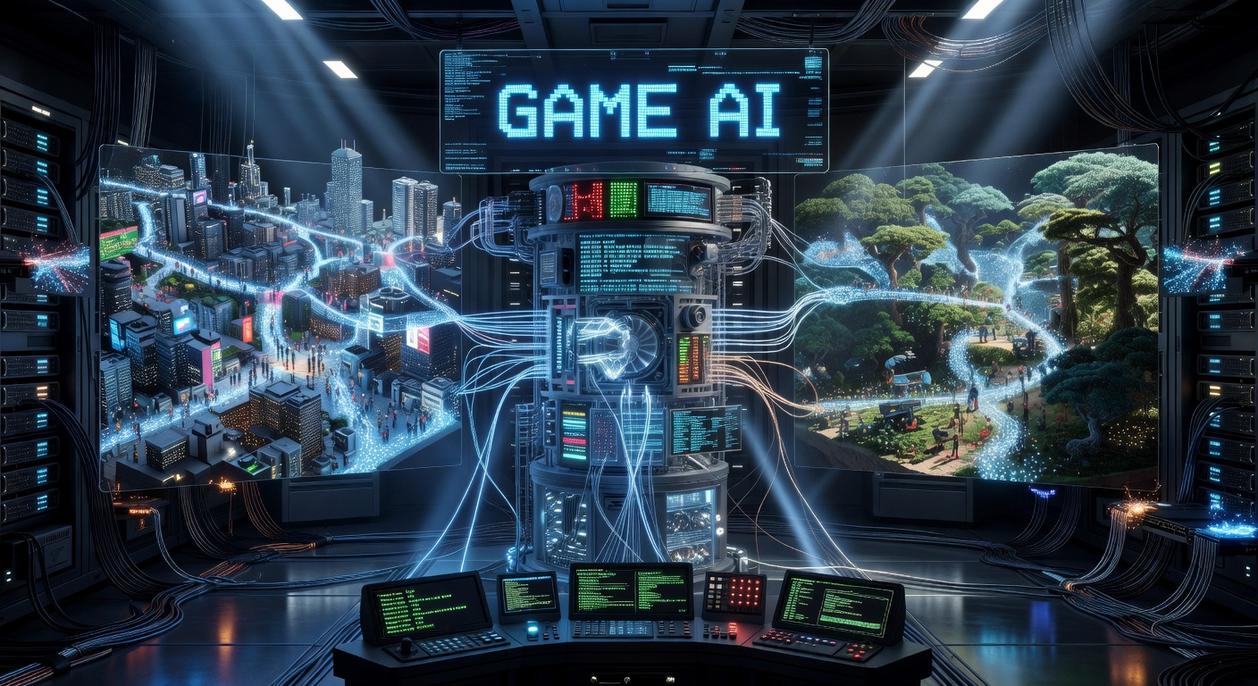
Artificial intelligence in video games has evolved from simple enemy pathfinding into something far more ambitious: a behind-the-scenes design partner. First, consider Dynamic Difficulty Adjustment (DDA), a system where AI monitors player performance and subtly tweaks challenge levels in real time. If you’re breezing through enemies like Neo in The Matrix, the game nudges difficulty upward. If you’re struggling, it eases off. The goal is the “flow state,” a psychological sweet spot between boredom and frustration, defined by psychologist Mihaly Csikszentmihalyi (1990). In other words, just hard enough to keep you hooked.
Meanwhile, automated playtesting changes development entirely. Instead of relying solely on human testers, AI agents can run through a game thousands of times in hours, exposing bugs, balance gaps, or game-breaking exploits. Think of it as speedrunning QA at superhuman scale (no energy drinks required).
Finally, personalization takes center stage. AI can analyze your playstyle—stealthy, aggressive, loot-obsessed—and dynamically generate tailored side-quests or item drops. As a result, no two players experience the same journey. Pro tip: personalization works best when subtle; players should feel understood, not surveilled.
The Next Frontier: Generative AI and Real-Time Creation
Imagine stepping into a game where no two conversations are ever the same. Thanks to artificial intelligence in video games, characters can generate unique dialogue, evolve their personalities, and even shift the soundtrack in real time based on your choices. In other words, your experience becomes truly personal (finally, an NPC who remembers what you said).
So what’s in it for you? Freedom. Instead of selecting from preset dialogue wheels, you can shape open-ended narratives and influence outcomes naturally.
Even more exciting, AI can act as a dynamic Dungeon Master—co-creating quests, adapting challenges, and building worlds around your playstyle. Explore more at the gaming strategy hub.
Your Next Adventure Will Be AI-Powered
AI is no longer a novelty; it’s a foundational pillar of modern game design, responsible for everything from smarter enemies to personalized adventures. The shift is measurable. In 2023, over 70% of AAA studios reported using procedural systems to drive dynamic content (GDC State of the Industry). Titles like Middle-earth: Shadow of Mordor proved adaptive enemy hierarchies boost retention, while No Man’s Sky leveraged algorithms to generate 18.4 quintillion planets. This is how artificial intelligence in video games transforms static scripts into living worlds. Players get narratives and replayability (ask anyone grinding New Game+).
Level Up Your Strategy with Smarter Play
You came here to better understand how evolving mechanics, competitive trends, and artificial intelligence in video games are reshaping the way modern titles are played—and now you have the clarity to adapt. From smarter NPC behavior to advanced esports analytics and optimized gaming setups, you’ve seen how these shifts directly impact performance and long-term improvement.
The reality is simple: if you’re not adjusting to smarter systems and faster meta changes, you’re falling behind. Today’s competitive landscape rewards players who study patterns, refine their setups, and apply data-driven strategies. Ignoring these advancements means missed wins, slower progression, and unnecessary frustration.
Now it’s your move. Start refining your setup, analyze current tournament metas, and integrate smarter in-game decision-making into every session. If you’re serious about gaining an edge, dive deeper into advanced strategy breakdowns and proven optimization frameworks used by top competitors. Join thousands of competitive players who are already sharpening their advantage—take action now and turn insight into victory.
 Founder & Chief Visionary
Timothy Patrickidder has opinions about esports tournament insights. Informed ones, backed by real experience — but opinions nonetheless, and they doesn't try to disguise them as neutral observation. They thinks a lot of what gets written about Esports Tournament Insights, Deep Dives, Game Event Meta Analyses is either too cautious to be useful or too confident to be credible, and they's work tends to sit deliberately in the space between those two failure modes.
Reading Timothy's pieces, you get the sense of someone who has thought about this stuff seriously and arrived at actual conclusions — not just collected a range of perspectives and declined to pick one. That can be uncomfortable when they lands on something you disagree with. It's also why the writing is worth engaging with. Timothy isn't interested in telling people what they want to hear. They is interested in telling them what they actually thinks, with enough reasoning behind it that you can push back if you want to. That kind of intellectual honesty is rarer than it should be.
What Timothy is best at is the moment when a familiar topic reveals something unexpected — when the conventional wisdom turns out to be slightly off, or when a small shift in framing changes everything. They finds those moments consistently, which is why they's work tends to generate real discussion rather than just passive agreement.
Founder & Chief Visionary
Timothy Patrickidder has opinions about esports tournament insights. Informed ones, backed by real experience — but opinions nonetheless, and they doesn't try to disguise them as neutral observation. They thinks a lot of what gets written about Esports Tournament Insights, Deep Dives, Game Event Meta Analyses is either too cautious to be useful or too confident to be credible, and they's work tends to sit deliberately in the space between those two failure modes.
Reading Timothy's pieces, you get the sense of someone who has thought about this stuff seriously and arrived at actual conclusions — not just collected a range of perspectives and declined to pick one. That can be uncomfortable when they lands on something you disagree with. It's also why the writing is worth engaging with. Timothy isn't interested in telling people what they want to hear. They is interested in telling them what they actually thinks, with enough reasoning behind it that you can push back if you want to. That kind of intellectual honesty is rarer than it should be.
What Timothy is best at is the moment when a familiar topic reveals something unexpected — when the conventional wisdom turns out to be slightly off, or when a small shift in framing changes everything. They finds those moments consistently, which is why they's work tends to generate real discussion rather than just passive agreement.