
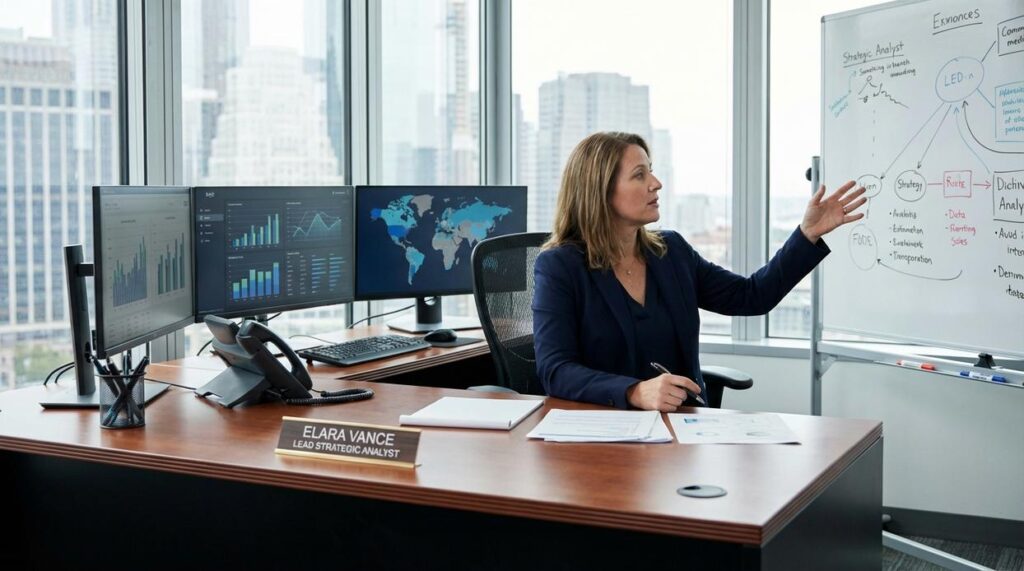
The Strategic Coach / Analyst: The Brains of the Operation

Behind every clutch Baron call or perfectly timed site execute, there’s usually a Strategic Coach / Analyst who saw it coming two days earlier. This role turns chaos into clarity. In simple terms, they convert raw inputs—VODs (Video on Demand recordings of past matches), patch notes, and scrim data—into structured, repeatable plans.
First, there’s VOD review. By meticulously breaking down their own matches and opponents’, analysts spot patterns: jungle pathing habits, default setups, late-game hesitation. It’s less “vibes” and more forensic science (think CSI, but with minimaps). According to research on performance analysis in esports, structured replay review significantly improves strategic adaptation and decision-making speed (Pedraza-Ramirez et al., 2020).
Then comes meta analysis. The “meta” refers to the most effective tactics available at a given time. Patches shift power rankings overnight. Analysts study global trends to anticipate—not react to—strategic shifts.
Some argue players should just “play their game” instead of over-preparing. And yes, instinct matters. However, without structured game planning—map-specific setups, draft theories, and counter-strategies—instinct becomes guesswork.
Finally, information synthesis is key. Data means nothing unless it’s translated into clear directives the team can execute under pressure.
Pro tip: Great analysts don’t overwhelm players with data—they prioritize what wins this match.
Understanding how preparation fits into tournament ecosystems is easier once you explore how major esports tournaments structure their formats.
Championship teams aren’t built on talent alone. They’re built on structure.
As we’ve detailed, a title-contending roster is supported by a diverse ecosystem of specialized esports coaching staff roles working in sync behind the scenes. Strategy, preparation, mindset, and execution all require dedicated leadership.
Relying on a single coach—or worse, raw player talent—is no longer a sustainable path to victory in professional esports. The competitive ceiling is simply too high. Without clear direction, advanced planning, and individual performance development, even mechanically gifted rosters stall when it matters most.
The solution is intentional infrastructure. A Head Coach sets the long-term vision and culture. A Strategic Coach architects drafts, opponent prep, and game plans. Specialist coaches elevate individual mechanics and mental resilience. Together, they create a durable foundation that performs under pressure.
You came here to understand what it really takes to build a complete coaching infrastructure. Now you see the blueprint—and the gap that might exist in your own system.
Understanding the critical influence of coaching staff in shaping strategies and player dynamics is essential for grasping the nuances of elite esports, especially when considering how these decisions impact Top Character Picks and Bans from Recent Competitive Events.
Build the Structure That Wins Championships
If your roster keeps falling short in high-stakes moments, the issue may not be talent—it’s structure.
Assess your current esports coaching staff roles today. Identify the single most critical position missing from your lineup and prioritize it. The teams lifting trophies aren’t guessing—they’re investing in complete systems.
Audit your coaching staff now and take the next strategic step toward championship-level performance.
 Founder & Chief Visionary
Timothy Patrickidder has opinions about esports tournament insights. Informed ones, backed by real experience — but opinions nonetheless, and they doesn't try to disguise them as neutral observation. They thinks a lot of what gets written about Esports Tournament Insights, Deep Dives, Game Event Meta Analyses is either too cautious to be useful or too confident to be credible, and they's work tends to sit deliberately in the space between those two failure modes.
Reading Timothy's pieces, you get the sense of someone who has thought about this stuff seriously and arrived at actual conclusions — not just collected a range of perspectives and declined to pick one. That can be uncomfortable when they lands on something you disagree with. It's also why the writing is worth engaging with. Timothy isn't interested in telling people what they want to hear. They is interested in telling them what they actually thinks, with enough reasoning behind it that you can push back if you want to. That kind of intellectual honesty is rarer than it should be.
What Timothy is best at is the moment when a familiar topic reveals something unexpected — when the conventional wisdom turns out to be slightly off, or when a small shift in framing changes everything. They finds those moments consistently, which is why they's work tends to generate real discussion rather than just passive agreement.
Founder & Chief Visionary
Timothy Patrickidder has opinions about esports tournament insights. Informed ones, backed by real experience — but opinions nonetheless, and they doesn't try to disguise them as neutral observation. They thinks a lot of what gets written about Esports Tournament Insights, Deep Dives, Game Event Meta Analyses is either too cautious to be useful or too confident to be credible, and they's work tends to sit deliberately in the space between those two failure modes.
Reading Timothy's pieces, you get the sense of someone who has thought about this stuff seriously and arrived at actual conclusions — not just collected a range of perspectives and declined to pick one. That can be uncomfortable when they lands on something you disagree with. It's also why the writing is worth engaging with. Timothy isn't interested in telling people what they want to hear. They is interested in telling them what they actually thinks, with enough reasoning behind it that you can push back if you want to. That kind of intellectual honesty is rarer than it should be.
What Timothy is best at is the moment when a familiar topic reveals something unexpected — when the conventional wisdom turns out to be slightly off, or when a small shift in framing changes everything. They finds those moments consistently, which is why they's work tends to generate real discussion rather than just passive agreement.