

Engineering Your Competitive Edge
Understanding the intricate psychology of high-performance gamers—where focus, stress, and resilience play critical roles—can provide valuable insights that enhance our appreciation of the meta shifts during international tournaments, as explored in our accompanying article – for more details, check out our Meta Shifts During International Tournaments Explained.
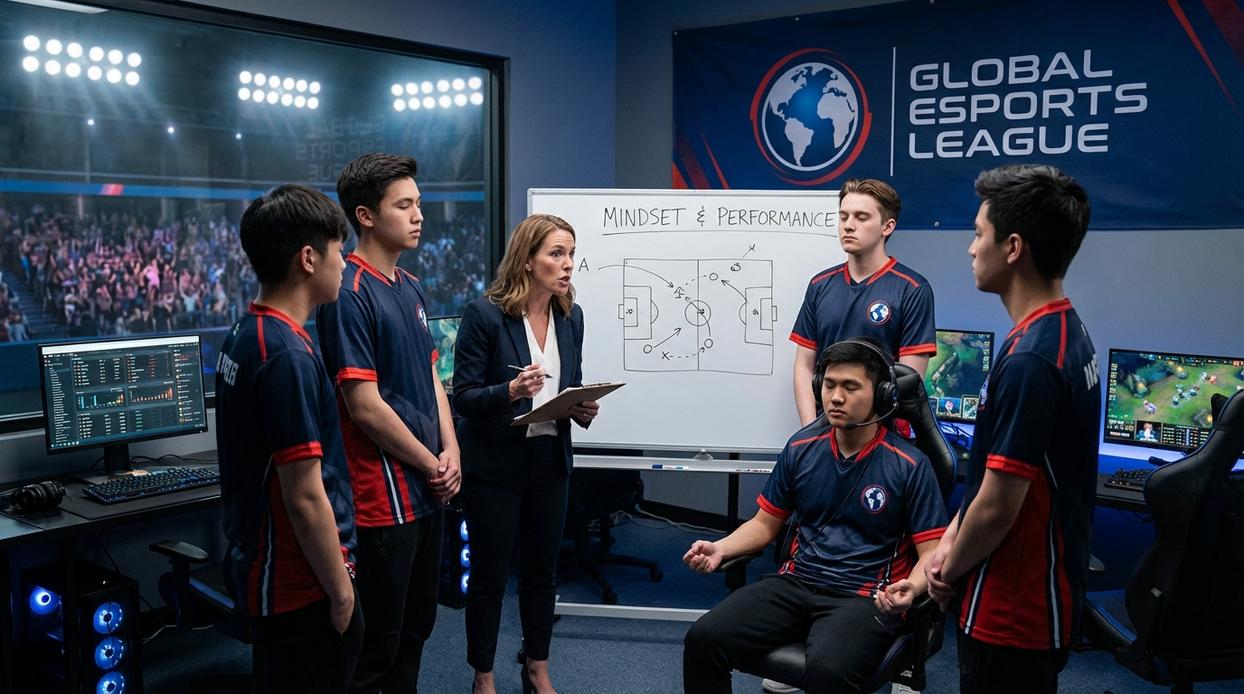
Elite performance in gaming isn’t built on grind alone. It’s engineered.
Throughout this guide, you’ve seen that top-tier results come from a blend of sharp mechanics, emotional discipline, physical optimization, and the psychology of professional gamers. The difference between plateauing and progressing isn’t more hours—it’s better structure.
If you’ve been stuck despite playing more, you already know the frustration. Queueing up again and again without a system only reinforces bad habits. Playing harder isn’t the answer. Playing smarter is.
A durable, professional-grade mindset comes from intentional development. Reviewing your VODs with purpose. Managing tilt before it spirals. Fueling and resting like performance matters—because it does.
Start today. Choose one area—tilt control, VOD review, or focus training—and make it non-negotiable in your routine.
At LCF Gamevent, we break down elite strategies, tournament meta shifts, and performance systems used by serious competitors. If you’re ready to stop spinning your wheels and start competing with an edge, dive into our guides now and level up with proven insights.
 Senior Esports Strategy Analyst
There is a specific skill involved in explaining something clearly — one that is completely separate from actually knowing the subject. Havros Dornhaven has both. They has spent years working with current highlights in a hands-on capacity, and an equal amount of time figuring out how to translate that experience into writing that people with different backgrounds can actually absorb and use.
Havros tends to approach complex subjects — Current Highlights, Esports Tournament Insights, Deep Dives being good examples — by starting with what the reader already knows, then building outward from there rather than dropping them in the deep end. It sounds like a small thing. In practice it makes a significant difference in whether someone finishes the article or abandons it halfway through. They is also good at knowing when to stop — a surprisingly underrated skill. Some writers bury useful information under so many caveats and qualifications that the point disappears. Havros knows where the point is and gets there without too many detours.
The practical effect of all this is that people who read Havros's work tend to come away actually capable of doing something with it. Not just vaguely informed — actually capable. For a writer working in current highlights, that is probably the best possible outcome, and it's the standard Havros holds they's own work to.
Senior Esports Strategy Analyst
There is a specific skill involved in explaining something clearly — one that is completely separate from actually knowing the subject. Havros Dornhaven has both. They has spent years working with current highlights in a hands-on capacity, and an equal amount of time figuring out how to translate that experience into writing that people with different backgrounds can actually absorb and use.
Havros tends to approach complex subjects — Current Highlights, Esports Tournament Insights, Deep Dives being good examples — by starting with what the reader already knows, then building outward from there rather than dropping them in the deep end. It sounds like a small thing. In practice it makes a significant difference in whether someone finishes the article or abandons it halfway through. They is also good at knowing when to stop — a surprisingly underrated skill. Some writers bury useful information under so many caveats and qualifications that the point disappears. Havros knows where the point is and gets there without too many detours.
The practical effect of all this is that people who read Havros's work tend to come away actually capable of doing something with it. Not just vaguely informed — actually capable. For a writer working in current highlights, that is probably the best possible outcome, and it's the standard Havros holds they's own work to.